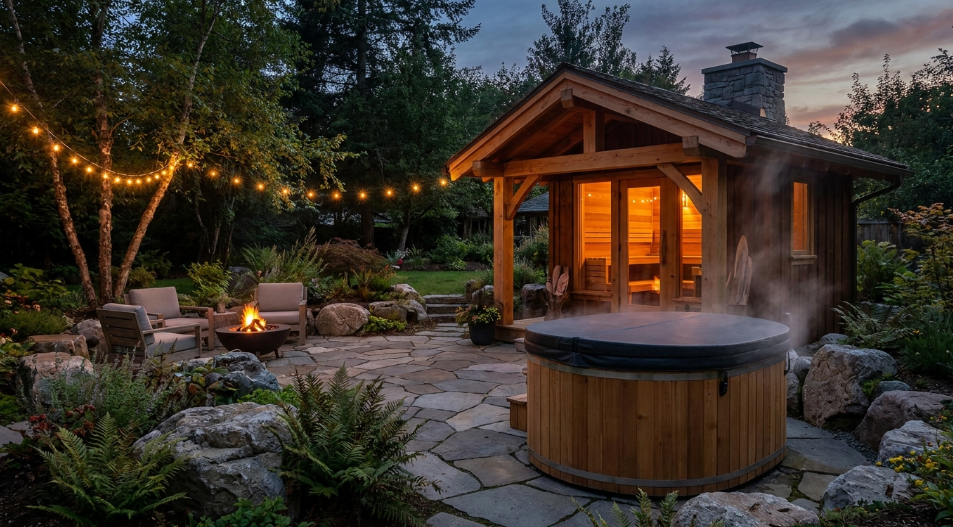
A basic outdoor contrast therapy setup, a compact sauna cabin paired with a non-chilled cold plunge tub, typically runs $3,500 to $7,000 fully installed. Add a chiller unit for consistent cold water year-round and the total climbs to $6,000 to $12,000 or more, depending on sauna size and heater type. Running costs stay modest either way, usually $20 to $50 a month for a household using both a few times a week. Here is where the money actually goes, line by line.
Line Item One: The Sauna Cabin and Heater
A two to three-person outdoor cabin with an electric heater runs $2,500 to $6,000 depending on wood species, wall construction, and heater wattage. Infrared units sit at the lower end of that range, while a traditional double-wall cedar cabin with a full electric heater pushes toward the higher end. This is usually the single largest line item in the whole project, and it is worth comparing wall construction and heater sizing across a few options before deciding on a size, since undersizing to save money upfront often costs more in running expense over a cold winter.
Line Item Two: Electrical Work for the Sauna
Most outdoor electric heaters above 4.5 kW need a dedicated 240-volt circuit run from your panel to the site. For a cabin close to the house, that might be $500 to $1,000. Further out in the yard, trenching and direct-burial cable can push this to $1,500 to $2,500. This cost gets skipped in a lot of rough budget estimates and then shows up as a surprise once an electrician actually quotes the job.
Line Item Three: The Cold Plunge Tub Itself
A basic insulated plunge tub, filled and cooled with ice as needed, runs $300 to $1,200 depending on size and material, wood-clad versus simple plastic or stock tank. This is the cheapest entry point into contrast therapy and works fine for households willing to manage ice manually before each session.
Line Item Four: A Chiller Unit, If You Want One
A dedicated chiller that holds water at a consistent cold temperature without ice adds $2,000 to $4,000 to the plunge side, plus a modest ongoing electricity draw. Whether this is worth it comes down to frequency and climate. Someone plunging daily in a warm-summer region will burn through a lot of ice and a lot of patience without one, while an occasional user in a cooler climate might never need it.
Line Item Five: Site Prep for Both Structures
A gravel pad or small deck section for the sauna, plus a stable, level base for the plunge tub, typically adds $500 to $1,500 combined, depending on whether you are doing it yourself or hiring it out. Placing both close together simplifies the walk between hot and cold, which matters more for actually sticking with a contrast routine than most buyers expect going in.
Line Item Six: Keeping Both Structures Weatherproof Over Time
An outdoor plunge tub and sauna cabin both face sun, rain, and temperature swings a spa-installed setup never deals with. Wood-clad plunge tubs need the same kind of periodic sealing as the sauna exterior, typically every one to two years, running $50 to $150 in materials. A metal chiller unit, if you have one, benefits from a simple weatherproof cover when not in use to extend its lifespan beyond the manufacturer’s baseline outdoor rating. None of this is expensive individually, but skipping it across two structures instead of one adds up faster than owners of a single sauna typically expect.
What Does It Cost to Run Both Every Month?
Sauna electricity for three to four sessions a week runs roughly $15 to $30 a month for a mid-size electric heater. A chiller adds another $10 to $20 a month depending on ambient temperature and how often the tub is used. An ice-based plunge without a chiller adds essentially nothing to the electric bill, though buying ice regularly has its own small recurring cost that is easy to underestimate over a full season. All told, most households land in the $20 to $50 a month range for a combined setup used several times weekly.
Is the Combined Cost Worth It Compared to a Facility Membership?
A single contrast therapy session at a wellness facility or spa commonly runs $30 to $60. A household doing that twice a week spends more in a single month than most home electric setups cost to run for an entire year. The upfront installation is the real investment here; the ongoing running cost is usually the smallest part of total ownership once the first year is behind you. Buyers pricing out a combined setup can compare cabin sizes and heater options in the SweatDecks catalog before deciding how much sauna capacity actually makes sense next to a plunge tub in a given yard.
What Does the Evidence Actually Support Here?
The sauna side of this pairing has real long-term research behind it. A large Finnish cohort study published in JAMA Internal Medicine found regular sauna bathing associated with lower rates of fatal cardiovascular events and all-cause mortality, and a follow-up study in Annals of Medicine found the association held even after accounting for cardiorespiratory fitness. Short-term research in Heart and Vessels has also found measurable changes in blood-based cardiovascular markers after sauna sessions in regular users. These are association findings from cohort and observational data, not proof that sauna bathing alone prevents disease, and the cold plunge side of contrast therapy has a thinner, more mixed evidence base by comparison, worth knowing before treating the combination as a guaranteed health upgrade rather than a genuinely enjoyable routine with some real research behind half of it.
Frequently Asked Questions
How much does a full outdoor sauna and cold plunge setup cost?
A basic combination typically runs $3,500 to $7,000 installed. Adding a chiller or upsizing the sauna can push the total to $10,000 or more.
Is a chiller worth the extra cost for the cold plunge side?
It depends on climate and frequency. In a warm region, a chiller avoids constant ice buying, which can justify the added $2,000 to $4,000 for frequent users.
What does contrast therapy cost per month to actually run?
Expect $20 to $50 a month combined for a household using both a few times a week, mostly sauna electricity plus a modest chiller draw if installed.
Does the evidence support the cardiovascular benefits of the sauna side?
Yes, with the caveat that these are association studies. Finnish cohort research links regular sauna bathing with lower rates of fatal cardiovascular events, though this does not prove causation.
References
- “Association between sauna bathing and fatal cardiovascular and all-cause mortality events.” JAMA Internal Medicine, 2015. https://pubmed.ncbi.nlm.nih.gov/25705824/
- “Joint associations of sauna bathing and cardiorespiratory fitness on cardiovascular and all-cause mortality risk: a long-term prospective cohort study.” Annals of Medicine, 2018. https://pubmed.ncbi.nlm.nih.gov/28972808/
- “Short-term effects of Finnish sauna bathing on blood-based markers of cardiovascular function in non-naive sauna users.” Heart and Vessels, 2018. https://pubmed.ncbi.nlm.nih.gov/29971466/
