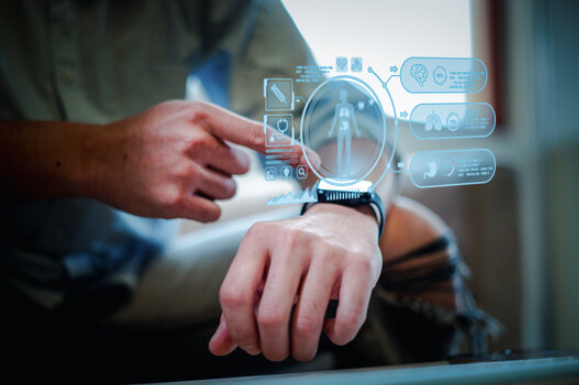
Technology is fundamentally transforming healthcare devices, enhancing their capabilities and efficiency. Wearable technology has emerged as a key player, enabling continuous patient monitoring and fostering proactive health management. Concurrently, AI-driven diagnostic tools are improving accuracy in disease detection, streamlining clinical workflows. As innovations like smart implants and robotic surgery gain traction, they promise to reshape treatment methodologies. The implications of these advancements extend beyond current practices, raising questions about the future of healthcare delivery.
The Role of Wearable Technology in Patient Monitoring
Wearable technology has emerged as a transformative force in patient monitoring, offering a range of devices that empower individuals to manage their health proactively.
By facilitating health tracking and fitness monitoring, these devices provide real-time insights into vital signs and activity levels.
This autonomy enhances personal accountability, enabling users to make informed decisions about their well-being and encouraging a more active lifestyle.
Advancements in AI-Driven Diagnostic Tools
Recent advancements in AI-driven diagnostic tools are revolutionizing the landscape of healthcare, significantly enhancing the accuracy and efficiency of medical assessments.
By leveraging sophisticated AI algorithms and predictive analytics, these tools improve diagnostic accuracy, enabling earlier detection of diseases.
Consequently, they contribute to better patient outcomes, empowering healthcare professionals to make informed decisions and ultimately fostering a more effective healthcare system.
Telehealth Solutions and Their Impact on Access to Care
The integration of technology in healthcare has not only advanced diagnostic capabilities but has also paved the way for innovative telehealth solutions that significantly enhance access to care.
Virtual consultations allow healthcare providers to connect with remote patients effortlessly, breaking geographical barriers. This accessibility fosters timely medical attention, reduces wait times, and empowers individuals to seek care conveniently, promoting overall health and well-being.
See also: flymenews
Future Trends: What’s Next for Healthcare Devices?
What innovations lie ahead in the realm of healthcare devices?
The future promises advancements such as smart implants that monitor health metrics in real-time and enhance patient outcomes.
Additionally, robotic surgery is expected to become increasingly precise, allowing for minimally invasive procedures and faster recovery times.
These technologies are set to empower patients and redefine the landscape of personalized healthcare.
Conclusion
In a world where a simple smartwatch can detect irregular heartbeats while a robotic arm performs intricate surgeries, the convergence of technology and healthcare exemplifies a remarkable coincidence of innovation and necessity. As these advanced devices proliferate, they not only enhance patient care but also reflect a collective commitment to health and well-being. This ongoing revolution signifies that, in the face of challenges, technology is not merely a tool but a vital partner in shaping a healthier future for all.